

IFEAT SUSTAINABILITY AWARDS 2026
2nd edition
Your sustainability story deserves recognition.
Entries are now closed. The 2026 winners will be revealed live in Bangkok this October.
IFEAT SUSTAINABILITY AWARDS 2026
2nd edition
Your sustainability story deserves recognition.
Entries are now closed. The 2026 winners will be revealed live in Bangkok this October.
ABOUT THE AWARD
Real Projects.
Measurable Impact.
Now in its second edition, the IFEAT Sustainability Awards recognise members whose implemented projects deliver measurable environmental and socio-economic impact, and give them a global stage to inspire the industry.
Shortlisted participants will present their projects at the IFEAT Conference in Bangkok — a powerful platform to share your results with the global F&F community.
"These Awards recognise achievement, and also remind us that the future of our industry depends on the choices we make today."
Eduardo Mattoso · IFEAT Socio-Economic Committee Chair

Celebrating Sustainable Leadership
Recognising outstanding environmental and socio-economic initiatives driving meaningful change in the F&F industry.

Showcasing Innovation & Solutions
Spotlighting inspiring projects and proven best practices that motivate others to adopt impactful, scalable solutions.

Fostering Industry Collaboration
Creating a platform for dialogue and shared learning, encouraging partnerships for collective progress toward a sustainable future.
Award Categories
Who can apply?
Two categories. Four levels of recognition in each. Awards presented in Bangkok at the annual conference.
Category 1
1–250 Employees

Small & Medium Enterprises
Some of the most groundbreaking sustainability projects come from smaller, more agile companies. This category is for the pioneers proving that size is no barrier to impact.
Category 2
>250 Employees

Large Companies
Large companies have the reach to drive systemic change across global supply chains. This category recognises those using that scale responsibly — and ambitiously.
Eligibility
- ●Active IFEAT membership required
- ●All company sizes and countries eligible
- ●Implemented projects beyond pilot phase
- ●One application per company
- ●Submissions must be in English
- ●Previous year's project may be re-submitted
The Prizes
What do winners receive?
Winners will receive recognition across the global F&F community — and a stage to inspire the wider industry. Rewards vary by prize level.
People's Choice Award Nominees 2026
The People’s Choice Award puts the power of recognition in the hands of the F&F community. Throughout the conference, delegates vote via the app for their favourite project. Voting closes at 12:00PM ICT on Friday 23 October. The winner is announced at the Closing Banquet that evening.
Plant Lipids
NURTURE 360 Chilli Programme
Making sustainable chilli farming pay for more than 15,000 small farming families in India.
Chilli is one of India's most chemical-intensive crops, yet the smallholders who grow it have long carried the cost: payment that took up to three months, opaque markets, and exposure to banned pesticides. Plant Lipids' NURTURE 360 Chilli Programme, launched in 2021, starts from a simple idea: farmers will only farm sustainably if it pays. Village procurement centres bring the market within 3 km of the farm, weighing is done in the open, and payment arrives within 72 hours. Premiums reward integrated pest management and a phased move to regenerative farming, while unmarked jute bags keep illegal dyes out of the food chain. The results are measurable. Over four seasons, the programme has paid US$ 53.5 million directly to farming families, and two government laboratories have recorded a 22% rise in soil organic carbon. When sustainable farming pays, farmers do not need to be persuaded.

PT Jutarasa Abadi
Patchouli Beneath Cinnamon Canopy
Patchouli grown beneath young cinnamon gives Kerinci farmers an income during the eight years before cinnamon harvest.
In the Kerinci highlands of Jambi, cinnamon takes at least eight years to reach harvest. Jutarasa plants patchouli as living ground cover beneath the young trees. It controls weeds without chemicals, holds soil on steep slopes and is harvested three to four times a year. The still is fired with cinnamon trunk left after bark harvest, instead of firewood from the forest edge. Synthetic pesticides and fertilisers are banned in every partnership agreement.

Synthite
SENS (Sustainable, Ethical, Natural, Scalable) – Tuberose
India's native tuberose restored on 92 acres, with fair, independently verified livelihoods for 187 smallholder farmers
Naatu Sampangi, India's native single-petal tuberose, was being lost to hybrids. Synthite's SENS programme brought it back. A dedicated nursery returned native bulbs to farmers, and 92 acres now grow the native cultivar around Tiruvannamalai, Tamil Nadu. The model is direct and transparent: village procurement centres replace middlemen, and 187 smallholder farmers are paid electronically every seven days, around 20% above production cost and benchmarked to a living income. More than a third of the farms are women-led. Cultivated with 30% fewer inputs and a lower carbon footprint, the crop carries independent UEBT verification. Human rights due diligence is delivered through an intensive engagement programme with the Fair Labor Association, alongside leading agricultural research institutes for crop technology and production. Proven on a single flower, the model is now scaling and replicating across other crops and geographies.

Vinasamex
Empowering Ethnic Minority Women through a Traceable Organic Cinnamon Value Chain
A traceable organic cinnamon chain in northern Vietnam, where women hold 70% of farmer-group leadership roles.
Vinasamex turned a fragmented cinnamon supply chain in Văn Bàn District, Lào Cai, into a certified, traceable organic system. It works with ethnic minority smallholders from Tày, H’Mông and Dao communities. Farmers are trained in organic cultivation and sell directly to Vinasamex at stable prices. Fourteen farmer groups manage the certified area. Women are about 80% of participants and hold about 70% of leadership roles. Partners include the Lào Cai Agricultural Extension Centre and SNV.

Zalabi
Building the Future of Mediterranean Essential Oil Production
Making every resource count in Mediterranean essential oil production.
In Guadix, Southern Spain, where water is scarce and agriculture has shaped the landscape for generations, the Zalabí Model applies organic and regenerative farming, precision irrigation, renewable energy and circular distillation to crops including Red Thyme, Rosemary, Spanish Marjoram and Spanish Sage. Designed with the long term in mind, the model delivers lower resource use, yields above conventional benchmarks and a low product carbon footprint, while creating skilled rural jobs and keeping more value where the essential oils are produced.

Berje
The Buchu Model: Cultivating Sustainable Partnerships
Sharing the value of buchu fairly with the Khoi and San, through one of only two industry-wide benefit-sharing agreements worldwide.
Berje has sourced South African buchu since the 1970s. With partner Waterfall Health Farms, it helped move supply from mostly wild harvesting to cultivation. This protects wild plants in the Cape Floristic Region. Through the Buchu Association, it supported an industry-wide Access and Benefit Sharing agreement, signed in 2023. The agreement is with the National Khoi and San Council and the South African San Council. Benefits include payments and skills training, such as the Buchu Short Course.

IFF
Conscious Collection
Pioneering 100% renewable extraction processes with plant-based solvents or upcycled CO2, to create the first COSMOS-approved absolutes, bringing sustainability and olfactive richness together.
Absolutes have long been extracted with petrochemical solvents such as hexane. Through continued research and investment in green chemistry, LMR advanced natural extraction with renewable extraction solvents: this includes an organic plant-based solvent, and a CO₂ process using upcycled, natural and renewable CO₂, expanding its portfolio of conscious ingredients with no petrochemical residues. This innovation enabled the first COSMOS-approved absolutes while preserving the olfactive richness of natural ingredients. It is also rooted in long-term sourcing partnerships, allowing more sustainable cultivation practices and fair income opportunities for farming communities. One example is the Fair For Life-certified jasmine supply chain in southern India.

Borregaard
Bio-based Vanillin from Wood
Vanillin made from Norwegian spruce, with about 90% lower CO₂ emissions than fossil-based vanillin.
Most of the world’s vanillin is made from petroleum. Borregaard’s EuroVanillin Supreme is made from Norway spruce, from PEFC-certified forests. It is produced in an integrated biorefinery in Norway, which turns the whole tree into useful products. Compared with guaiacol-based vanillin, it emits about 90% less CO₂. It gives flavour and fragrance companies a renewable, drop-in alternative with a stable supply.

PT Indesso Aroma
Water Stewardship Program
Cutting factory water intensity by almost 30% and helping 300 patchouli farmers store rainwater for dry seasons.
Indesso’s programme covers both its factories and its patchouli sourcing areas. Wastewater recycling and rainwater harvesting cut water intensity by almost 30% across three manufacturing sites. Treatment sludge is turned into compost instead of waste. In Southeast Sulawesi, Indesso helped about 300 patchouli farmers build rainwater ponds. These store water through long dry seasons, protecting crops and farm incomes.
Main Camp WA
The Waslee Resilient Eucalyptus Project
Purpose-grown eucalyptus oil in Western Australia, powered by onsite wind energy, precision irrigation and circular land management.
At Waslee Downs in Western Australia, Main Camp WA grows approximately 250 hectares of Eucalyptus polybractea for essential oil production. Six centre pivots and metered bores enable efficient, precision irrigation in a high-evaporation climate, while onsite wind energy powers the operation. Spent eucalyptus biomass is returned to the land, supporting soil health and nutrient cycling. Livestock from neighbouring farms also graze within the plantation, helping manage vegetation while creating shared value with the local farming community.

ChainCraft
SensiCraft®
Turning potato juice (processing residue) into fatty acids for fragrance ingredients, replacing fossil and palm-based feedstock.
Many aroma ingredients rely on fossil feedstocks or palm and coconut oils. ChainCraft ferments low-value food industry residues into high-purity fatty acids. These renewable building blocks, such as bio-based caproic acid and n-hexanol, are drop-ins for existing flavour and fragrance applications. Their first full-scale plant in Groningen, the Netherlands, will be co-sited with Royal Avebe’s potato starch processing plant. It will turn 300,000 tonnes of potato juice into clean water and 20,000 tonnes of renewable fatty acids each year.
Avilan (Matia 145 S.L.)
The Tonka Stepping Stone
Giving Amazon harvesters a year-round legal income from standing forest, as an alternative to illegal mining.
Avilan sources tonka beans in the Bolívar-Amazonas region of southern Venezuela. About 50 collection points serve local and Indigenous communities. Only fallen fruit is collected, so the trees stay standing. Buying directly from harvesters has raised their income about 12-fold since 2020. The tonka season lasts four months, so Avilan now also buys angostura bark to cover more of the year. The aim is to keep harvesters out of illegal gold mining. The tonka operation is FairWild certified.
Evaluation Framework
How Applications Are Judged?
Applications go through a two-stage process. First, each submission is assessed using a structured scoring methodology developed by our external expert partner, Quantis — a leading global sustainability consultancy. The top shortlisted applications are then reviewed by the independent expert panel to select the final winners.

Environmental Impact
Does your project address a real environmental hotspot — reducing carbon emissions, improving water quality, or protecting and restoring biodiversity and ecosystems? Are the results tangible, measurable, and independently verified?
Socio-Economic Benefits
Does it improve the well-being of individuals and communities — through improved livelihoods, capacity building, economic resilience, or community health and safety? Can you show documented, verifiable outcomes that go beyond intention?
Scalability & Replicability
Could your approach work elsewhere — in other geographies, other parts of the business, or at greater scale? Are there major barriers, and how do you plan to overcome them?
Engagement
Does it bring meaningful partners together — across the supply chain, NGOs, academic institutions, or startups? How is the initiative communicated, and are key learnings shared to inspire wider adoption?
Each application is scored based on the maturity of the initiative, the strength of evidence provided, the scale of demonstrated impact, and the potential for wider adoption across the sector. The panel looks for implemented projects — beyond the pilot stage — with measurable outcomes.
Jury Panel
Meet the Expert Panel
Our panel has been carefully selected to be fully independent and objectively neutral. Upon receipt of the screened applications for the Awards from the Quantis process, each Jury member will be asked to highlight any potential conflicts of interest, and if necessary they will abstain from judging an individual entry, and leave it to be considered by the other panel members only.
The panel represents a cross-section of Sustainability expertise, with good knowledge of the challenges facing IFEAT member companies in some cases, and more importantly a broad and deep understanding of how Sustainability overall impacts our environment and the people who work in natural value chains. As such we are pleased to have a panel that brings a high degree of integrity to the scrutiny and judgement of the award applicants, something that we recognise all IFEAT members would welcome.

Rachna Sharma
Founder & CEO
Climate Ready Leaders

Hamish Taylor
Global Expert — Strategic Development, Value Chain Collaboration, Vanilla, HREDD & Biodiversity
Independent Expert

Gefei Yin
Founder & Chief Expert
GoldenBee

Charlotte Bande
Managing Director, Global Food & Bev Sector Lead
Quantis

Floriana Breyer
Researcher and Socio bioeconomy Articulator
Instituto de Pesquisas Ecológicas
Applicant Webinar —
Now On Demand

A full walk-through of the evaluation criteria, the application process, and a live Q&A.
Watch it back at your own pace
FREE TO ENTER
Open to IFEAT Members
Enter the IFEAT Sustainability Awards 2026
Your sustainability story deserves recognition.
APPLICATIONS CLOSED
Thank you for your interest in the IFEAT Sustainability Awards 2026.
WINNERS ANNOUNCED IN
23 October 2026
Marriott Marquis Queen's Park, Bangkok, Thailand
Meet the 2025 Winners
The inaugural IFEAT Sustainability Awards brought together outstanding projects from across the globe — recognised on stage at the IFEAT Conference in Göteborg. These are the projects that show how sustainable business can be not just possible — but scalable, replicable, and inspiring.
SME Category | 1–250 Employees

Norex Flavours Private Limited
Project Sankalp for mint
Norex's Project Sankalp supports mint farmers in India through improved cultivation and distillation practices, including Early Mint Technology, farmer training and strong value-chain collaboration. The initiative helps farmers adopt more efficient production methods while improving resource use, soil health and income resilience. Its broad reach across communities makes it a strong example of a scalable and collaborative approach to sustainable mint sourcing.
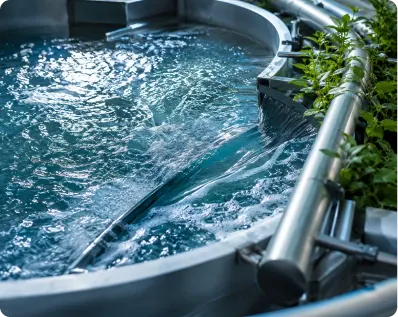

Zalabí
Scalable circular model for regenerative oils in water-scarce Spain
Zalabi has developed a regenerative essential oil model in Spain, combining organic production, renewable energy, water recirculation and circular distillation practices. The project reduces reliance on scarce resources and creates local employment in the Guadix region. By integrating environmental stewardship with regional economic development, Zalabi demonstrates how regenerative agriculture can strengthen both resilience and long-term value creation.
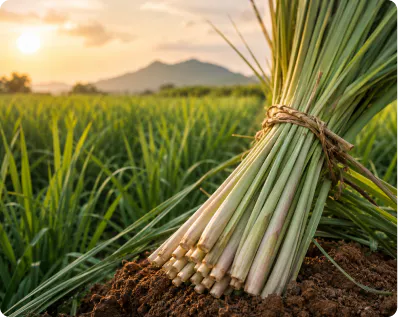
Origin Oils Private Limited
Lemongrass on fallow land project
Origin Oils has transformed degraded land in Madhya Pradesh into lemongrass cultivation in partnership with tribal farmers, local authorities and research partners. The project promotes organic practices, soil restoration and farmer training, while offering communities a new income source through a guaranteed buyback model — a compelling example of how land can be regenerated into a sustainable, inclusive sourcing model.
Large Company Category | >250 Employees

Privi Speciality Chemicals
Bio-based Innovation
Privi has developed a bio-based innovation that transforms by-products such as turpentine derivatives into high-value aroma ingredients. The approach supports more responsible sourcing, reduces dependence on fossil-based alternatives and encourages better use of existing natural resources. Through certifications, supplier standards and collaboration across the value chain, the project shows how circular thinking can be embedded into ingredient innovation.
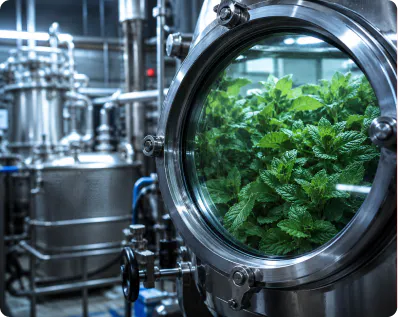
Mane Kancor
Sustainable and Traceable Mint Cultivation
Mane Kancor's project advances sustainable and traceable mint cultivation through improved agricultural practices, upgraded distillation methods, farmer training and certification. By helping farmers use resources more efficiently and strengthen the quality and traceability of production, the initiative contributes to more resilient mint supply chains — demonstrating how technical support and close farmer engagement can drive practical improvements at scale.


DSM-Firmenich
EcoScent Compass® Next Generation
DSM-Firmenich's EcoScent Compass® is a digital eco-design tool that integrates sustainability considerations directly into fragrance creation. By assessing environmental and social criteria during formulation, the tool enables teams to make more informed design choices and embed sustainability earlier in innovation — a long-term commitment to making sustainability more measurable, practical and actionable across the fragrance value chain.
What Makes a Strong Entry
Focus on one specific, implemented project — not your company's broader sustainability programme. The strongest applications tell a clear, measurable story: what you did, what changed, and what you can demonstrate.
Reflections from Edition 1
What Did We Learn?
Beyond celebrating the winners, the first edition offered a snapshot of where the industry stands on its sustainability journey — and where it is heading.
Sustainability in our industry is advancing along multiple paths — farming, chemistry, and technology. These solutions also raised important questions about accessibility and scalability, particularly for smaller enterprises.
"Ranking the many innovative applications was like solving a 54-facet Rubik's Cube: complex and multifaceted."
Peter Greenhalgh, IFEAT Sustainability Awards 2025

Mint Cultivation
Featured prominently as a testing ground for resilient, inclusive, and community-embedded farming models.

Regenerative Practices
Demonstrated how degraded land can be restored for long-term environmental and economic benefit.

Bio-Based Chemistry
Emerged as a key theme, reducing reliance on petrochemicals alongside eco-design and digital tools.

Eco-Design & Digital Tools
Digital traceability, real-time monitoring, and design-for-sustainability gaining significant traction across the sector.
Frequently Asked Questions
Everything you need to know before applying. Can't find your answer here?
Contact the awards team directly at sustainability@ifeat.org — we're happy to help with any questions about eligibility, the application process, or the evaluation criteria.